5 Benefits of Lion's Mane Mushroom
1. Improve focus, memory, and clarity
Lion’s mane is often referred to as “the smart mushroom” because of its ability to improve memory, focus, and clarity. This mushroom’s potent antioxidant and anti-inflammatory properties increase blood flow to the brain, leading to improved cognitive performance and a reduction of brain fog. In one study(1), taking lion’s mane extract led to improvements in humans diagnosed with mild cognitive impairment.
Additionally, research suggests that lion’s mane may help protect against memory problems caused by the buildup of amyloid beta—a substance that forms the brain plaques associated with Alzheimer's disease.
2. Support nerve health and recovery
Research shows that lion’s mane mushroom fuels the creation of an important compound called nerve growth factor(2). NGF is a protein that stimulates the production of new nerve cells and strengthens existing ones. This means that lion’s mane may encourage damaged nerves to grow and repair(3) more quickly.
These findings are a big deal and could play an important role in slowing or reversing cell degeneration in the brain which is the major cause of neurodegenerative diseases like Alzheimer’s disease, Parkinson’s disease, and stroke.
3. Help alleviate anxiety and depression
While there are many possible causes of anxiety and depression, chronic inflammation(4) is thought to be a major contributing factor. Animal research(5) has demonstrated that lion’s mane has powerful anti-inflammatory effects that can reduce symptoms of anxiety and depression in mice. Other animal studies(6) have found that lion’s mane can help regenerate brain cells and improve the functioning of the hippocampus, a region of the brain responsible for processing memories and emotional responses.
4. May protect against cancer
Exciting preliminary research suggests that lion’s mane may offer protection against cancer. One study(7), for instance, found that lion’s mane helped reduce the size of cancerous colon tumors in mice. The study’s findings suggested that lion’s mane may help fight off cancer, in part, by increasing activity in certain cells involved in the immune response.
5. Boost the immune system
Research has shown that lion’s mane may stimulate activity of the intestinal immune system, which is the body’s defence against pathogens that enter the body through the mouth and nose. While research is still in its initial stages, one study(8) found that giving mice lion’s mane nearly quadrupled the life span of those injected with a lethal dose of salmonella.
Where can lion’s mane be found?
If you're interested in experiencing the benefits of Lion’s Mane, you may be able to find it growing naturally on hardwood trees such as oak, maple, and birch throughout many regions of Canada and the northern United States, particularly during late summer and fall.
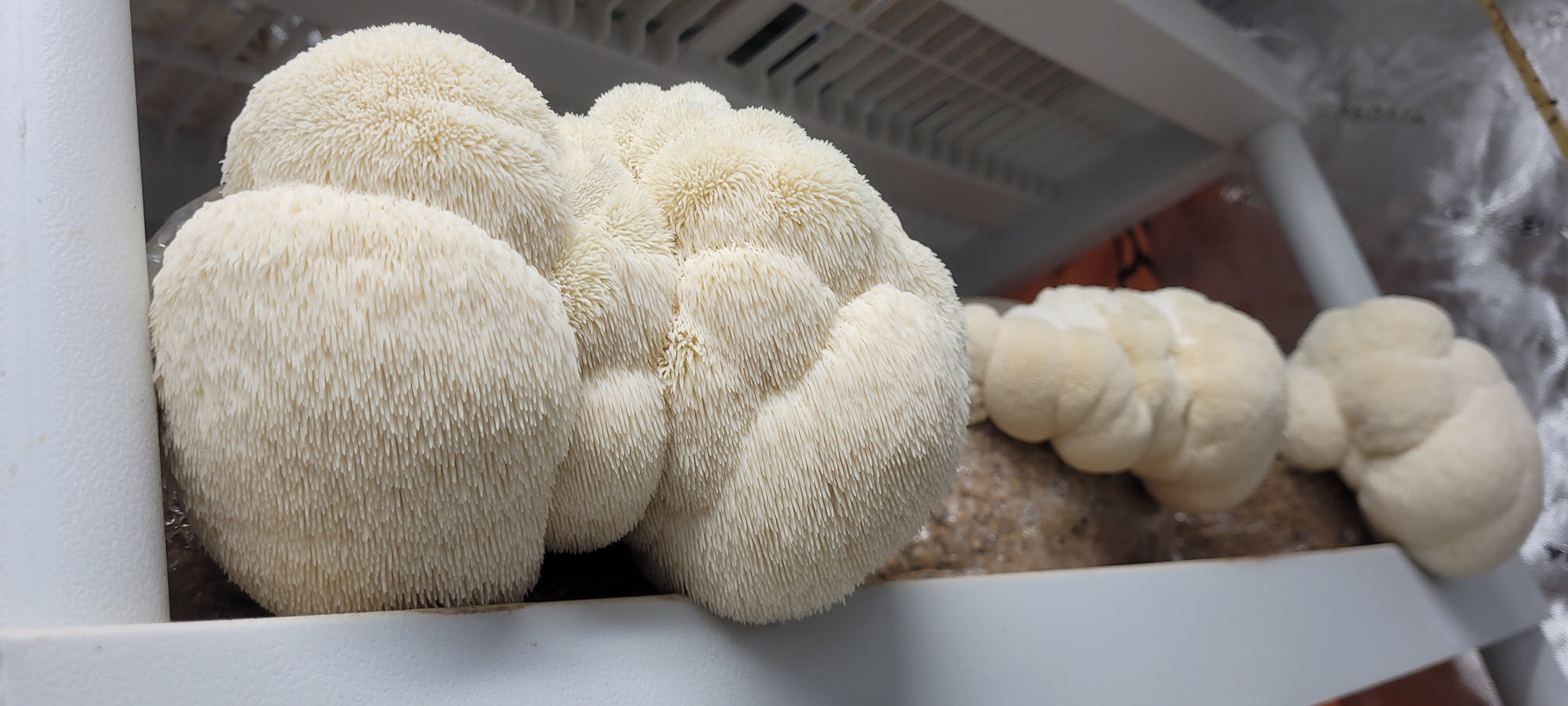
Although Lion’s Mane is known for its distinctive cascading white appearance, anyone new to mushroom foraging should exercise caution. Proper identification is essential, and beginners are encouraged to learn from experienced foragers or local mushroom experts before harvesting or consuming any wild mushrooms.
For those who prefer a safe and convenient option, high-quality cultivated Lion’s Mane is available directly from trusted growers, allowing you to enjoy this remarkable mushroom with confidence and peace of mind.
Find a trusted source for your lion’s mane
While foraging for wild Lion’s Mane can be a rewarding experience when done responsibly and with proper knowledge, a convenient and reliable option is to purchase it directly from trusted growers like us.
When choosing Lion’s Mane products, quality matters. Not all supplements and mushroom products are produced to the same standards. Look for suppliers who offer organically cultivated or responsibly wild-harvested Lion’s Mane, use careful processing methods, and conduct rigorous testing for contaminants such as heavy metals, pesticides, harmful microbes, and other impurities.
At LaVita Mushrooms Farm, we are committed to providing premium-quality Lion’s Mane grown with care, purity, and sustainability in mind, so you can enjoy the benefits of this remarkable mushroom with confidence.
The bottom line
Whether you're looking to support mental clarity and focus, enhance overall well-being, or incorporate one of nature’s most remarkable functional mushrooms into your daily routine, Lion’s Mane is an excellent addition to your wellness regimen. Celebrated for its unique properties and long history of use, this extraordinary mushroom has earned a well-deserved place in any natural health and supplement collection.
Here are the links for all sources mentioned:
(1) https://onlinelibrary.wiley.com/doi/abs/10.1002/ptr.2634
(2) https://pmc.ncbi.nlm.nih.gov/articles/PMC12030463/
(3) https://pubmed.ncbi.nlm.nih.gov/26853959/
(4) https://www.ncbi.nlm.nih.gov/pmc/articles/PMC6658985/
(5) https://pubmed.ncbi.nlm.nih.gov/29364170/
(6) https://pubmed.ncbi.nlm.nih.gov/29091526/